
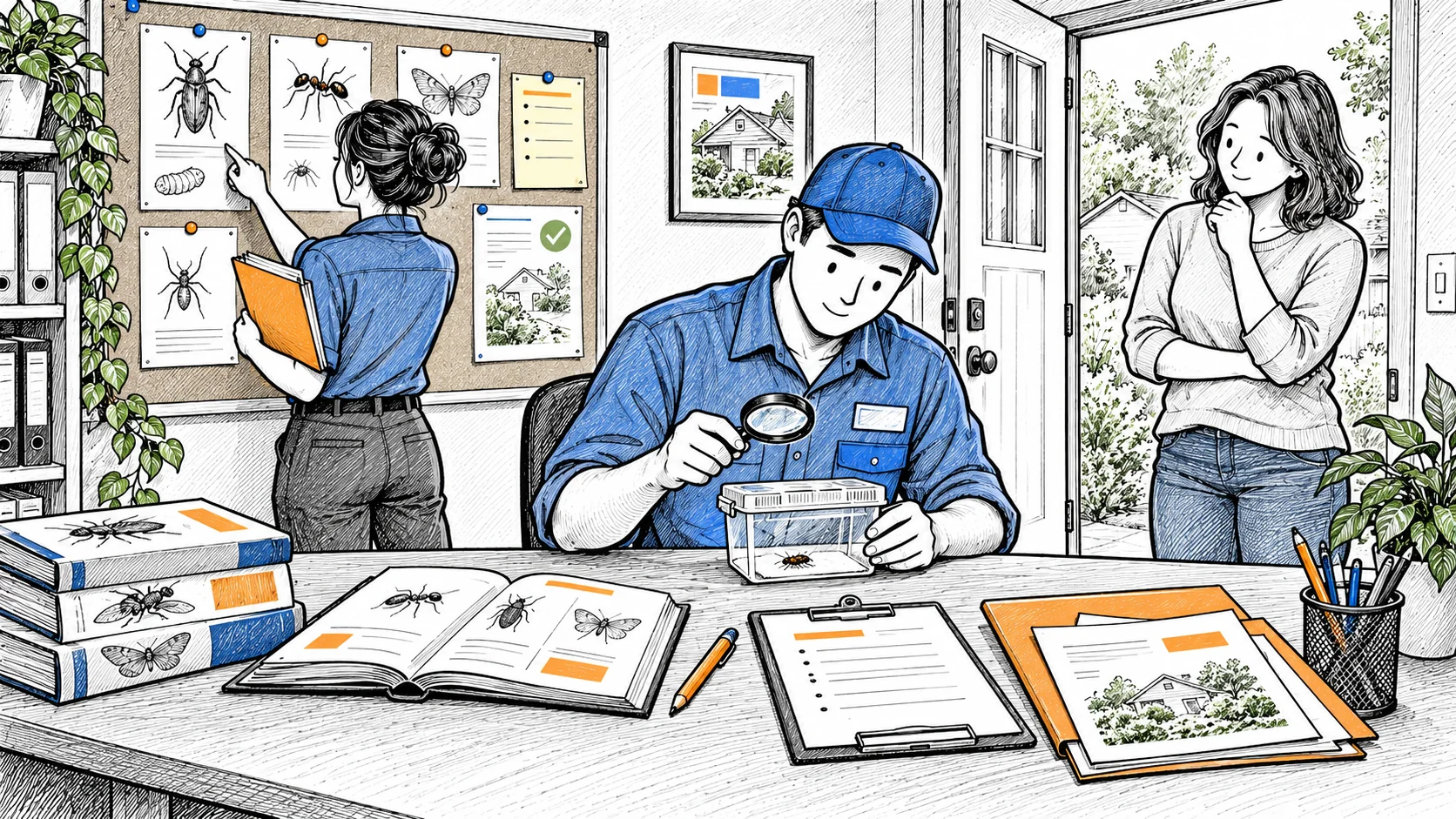
6 useful AI marketing jobs for pest control companies
A prospect sends a photograph of insects by a window and asks for a price. Before your office can discuss the work, someone needs to identify the pest and understand the property.
AI marketing for pest control companies can help the office prepare that conversation. An agent could gather the pictures and observations, find your approved service information and draft a response for the team. Qualified staff identify the pest and decide what the service involves.
The six examples below describe proposed applications requiring suitable tools, access and instructions. The businesses, messages and arrangements are fictional. They’re not tested BoastOS capabilities or measured customer results.
1. Turn a pest question into education the team can stand behind
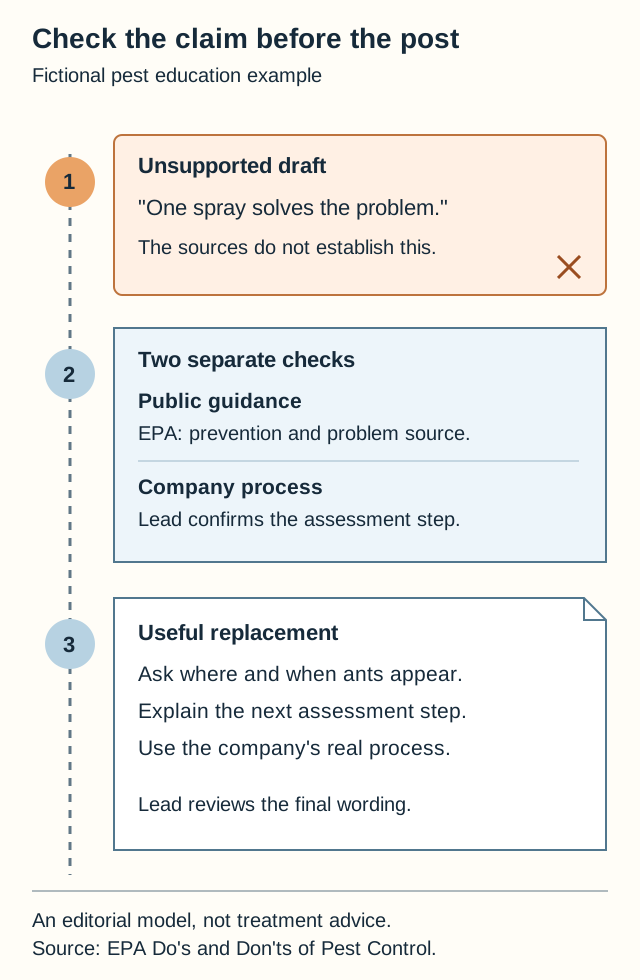
Recurring kitchen ants could be the subject of a useful article. A promise that one spray solves the problem wouldn’t explain what a customer should expect when contacting you.
Ask the technical lead to describe how your company investigates recurring activity. The agent could combine that approved process with relevant public guidance to prepare the article, flagging claims it can’t support.
The EPA’s pest-control guidance puts prevention first and advises customers hiring a provider to ask them to find and correct the source before applying pesticides. Use it to support an explanation of investigating causes. It doesn’t establish the outcome of your company’s treatment for every ant problem.
For this fictional company’s process, the invitation might read:
Tell us where you’ve seen the ants and when the activity occurs. Our team will discuss how to assess the problem. We can explain the service after we know more about the pest and property.
Have the technical lead check that this describes how your company actually handles inquiries. Keep the assessment step when the agent prepares a shorter social version or inquiry response; removing it would change the explanation.
Choose a question the office hears repeatedly, then ask the team whether the article answers it. After review, staff can send callers the explanation and reuse it in replies.
2. Explain the difference between a visit and an ongoing plan
“Does your household pest plan include termites?”
Give the agent the current agreement and service page. It could compare them and prepare a direct answer. For our fictional company, termite work is separate:
Termite work is outside this household plan. Our team can explain the separate assessment and service.
The office checks the covered pests, visits and return conditions against the agreement. Resolve an unclear term before replying or changing the page. This is worth doing when the plan name leaves customers unsure what they’re buying.
3. Gather the missing facts in an inspection enquiry
The inquiry says “Termites?” and includes two photographs of flying insects by a window. Keep the customer’s question with the images. Your team still needs to identify what they’ve seen.
Have the agent gather the attachments and compare the inquiry with your intake questions. Ask for a handoff containing both images, the reported observations and the information still needed. The office can then prepare its clarification request.
For this example, a draft could ask:
Which room or area were the insects in, and when did you notice them? We’ll pass your photographs and description to the team so they can advise on the next step.
Check the draft against your own intake and contact process. The file remains an open inquiry until qualified staff review it and decide the next step. Neither treatment nor price has been established by the pictures.
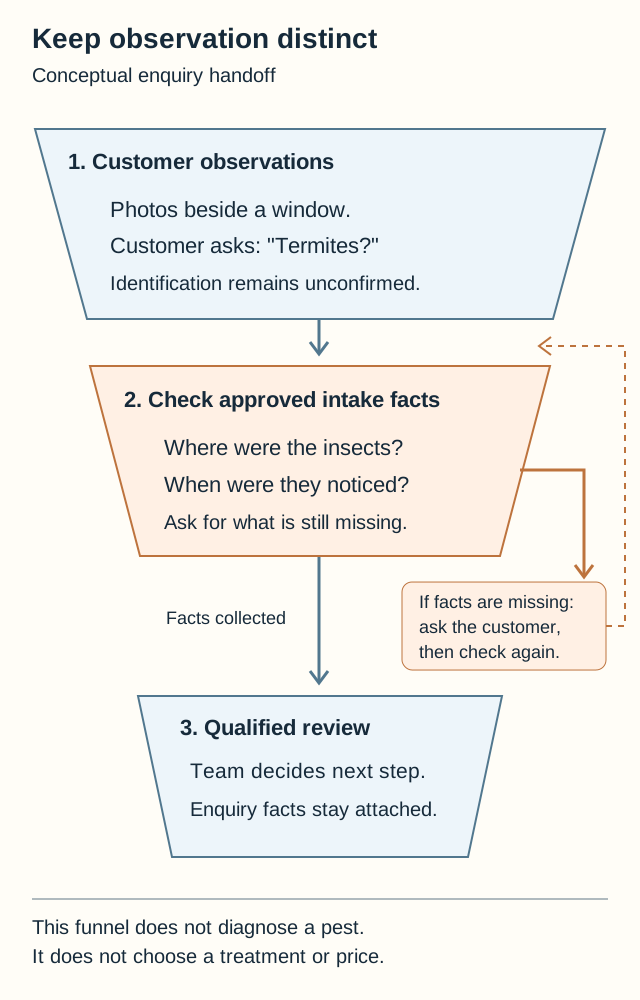
Pest control marketing automation could help when the office keeps chasing missing images and observations. Inspect the handoff before passing it on: the reviewer needs the pictures, the customer’s account and any unanswered intake questions, with reported concerns kept distinct from established findings.
4. Prepare a referral explanation for a commercial partner
A facilities contractor wants to introduce a warehouse customer reporting pest activity. They need to know what information to send and who will speak to the site contact.
An agent could prepare a short referral page from your commercial services, area and approved contact process. Include the requested inquiry information and the person who discusses an assessment. Have the commercial lead review the page before sharing it.
The contractor checks permission to pass on customer details. Your company confirms service fit and when it can respond. Choose this job if forwarded inquiries keep arriving without the context your office needs.
5. Build a seasonal message from confirmed local information
Start the seasonal brief with a homeowner question and your company’s current local observations. A regional source needs to support any seasonal claim. Reusing last year’s post won’t establish that the timing is right now.
Ask the agent to prepare the message with a link to your inspection explanation. Return the sources beside the copy for the technical lead, and have the office check the inquiry link.
For the window-insect question earlier in this article, a brief might contain customer observations but no confirmed seasonal evidence. You could still explain how to submit photographs for review. You couldn’t infer an infestation in every nearby home from a warm week.
Choose pest control marketing ideas your team can substantiate locally. Without seasonal evidence, the recurring question can still support an FAQ; leave borrowed calendar dates out of that explanation.
6. Answer the concern that prevents someone booking
“When can my dog use the garden afterward?”
The dog owner has a practical concern about the proposed service. Asking them again to book won’t settle it. Give the responsible technician the question and service details; the answer needs their treatment-specific instructions.
Once the technician has answered, the agent could prepare the customer reply with those instructions attached for review. Keep the wording faithful to them. An “eco-friendly” description won’t establish a waiting period or safety for this service.
The technician makes the decision; the agent helps prepare its communication. The office can return to booking after the customer’s concern is addressed.
Choose a question your team can settle
The plan explanation is a reasonable first job when the agreement is clear but customers keep asking what’s included. For an office chasing incomplete inquiries, assembling photos and observations may be more useful. Choose the gap your current records and reviewer can resolve.
Bring that question and the information you already use to answer it to a BoastOS BoastAble services discussion. Inspect the first finished page or response before deciding what else to add.
Prepared with AI assistance for BoastOS. The workflows and examples are proposed applications, not measured customer results.