

6 AI marketing jobs that help training companies explain their courses
“Is this the right course for me?” is a reasonable question. “Learn practical skills with expert instructors” does little to answer it.
A training company’s marketing needs to explain what people will do, what they need before joining and how the course fits their schedule. AI marketing for training companies could help assemble that information and prepare useful material around it. An agent would need appropriate tools, authorized course records and someone who can check the teaching details.
The six jobs below use a fictional adult training provider that runs spreadsheet workshops. They show possible workflows rather than tested BoastOS features or promised enrollment results.
1. Turn a course catalogue into a useful comparison
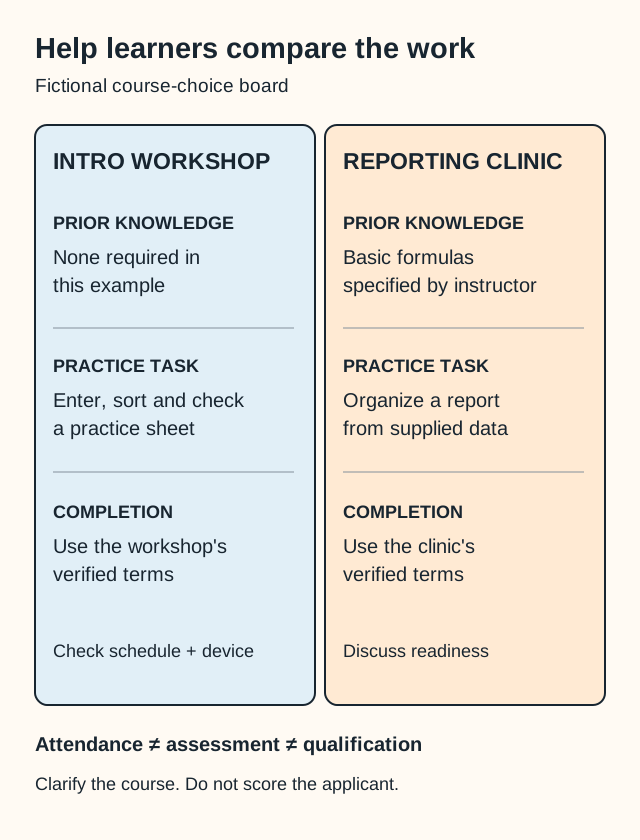
The provider offers an introductory spreadsheet workshop and a reporting clinic. Both mention spreadsheets. They ask different things of the learner.
An agent could read the approved course descriptions, identify the fields a prospective student needs and draft a comparison page. The instructor checks that comparison against the actual teaching plan. Where the catalogue says only “intermediate,” the agent should request a concrete prerequisite.
For this fictional pair, the useful comparison looks like this:
| Question | Introductory workshop | Reporting clinic |
|---|---|---|
| What should I already know? | Instructor confirms no prior spreadsheet experience required. | Instructor specifies prior use of basic formulas. |
| What will I practice? | Entering, sorting and checking a small practice sheet. | Organizing a report from a supplied practice dataset. |
| How is it taught? | Guided classroom exercises. | Instructor-led work on reporting tasks. |
| What happens at completion? | Use the provider’s exact completion terms. | Use the clinic’s own completion terms. |
| What still needs checking? | Current schedule and equipment requirements. | Readiness, schedule and equipment requirements. |
Completion terms deserve their own row. Attending a workshop, completing an assessment and earning a recognized qualification are different claims. Marketing must use the terms the provider can support, without letting a confident sentence imply a credential the course does not award.
This is a strong starting job when the course catalogue exists but students struggle to compare it. The agent organizes the information for a decision. It does not assess a person’s ability or decide whether they should be admitted.
2. Make a lesson sample from instructor material
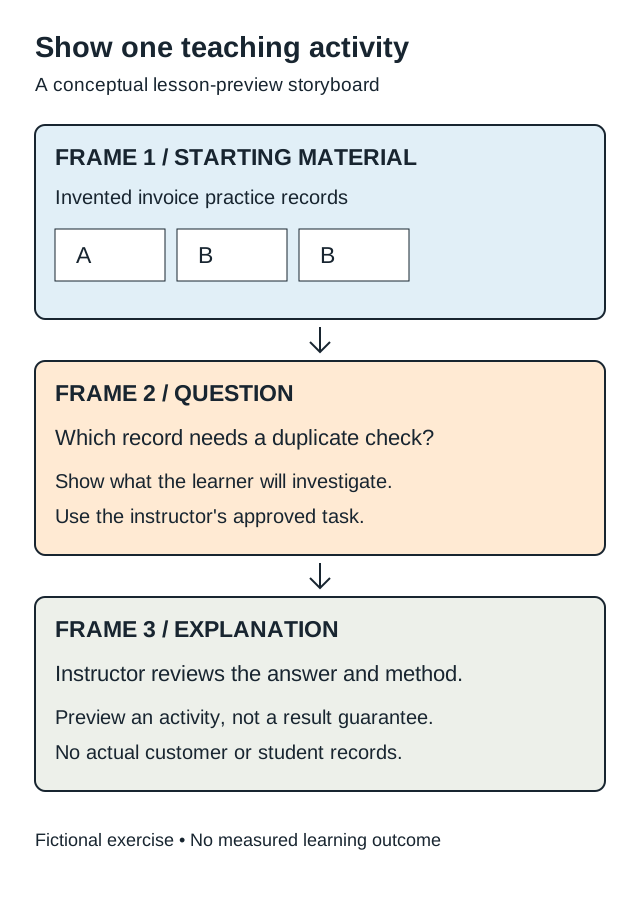
Show a prospective learner one real task from the teaching plan. For the fictional workshop, the instructor approves a short exercise about spotting duplicate invoices in invented practice records.
An agent could organize that material into a preview: the starting sheet, the question to investigate and the part the instructor will explain. The instructor reviews the task and answer before it appears on the course page.
Use authorized materials and fabricated practice data. Leave actual customer invoices and student work out unless their use is explicitly permitted. The sample shows the kind of activity offered; it does not prove that every learner will master it.
3. Coordinate promotion for a confirmed cohort
Three Tuesday workshops are a different offer from a course someone can take whenever they like. That difference belongs in the campaign, not in a correction sent after enrollment.
For training company marketing, an agent could use the confirmed cohort record to prepare the course page update, announcement email and social post together. The record supplies session dates, delivery mode, location, equipment requirements and the enrollment destination. The draft returns missing details to staff.
Check the dates as a set. A start date alone does not explain the commitment. If a learner misses the second session, is there a recording or another arrangement? Do not advertise a replay merely because other courses provide one.
Staff confirm the campaign against the current cohort arrangements before scheduling. Keep announcements tied to that cohort so a date change or cancellation can be reflected in every draft. This job suits a provider repeatedly assembling the same confirmed information across channels; it needs more than a slogan about limited places.
4. Use enrollment questions to improve course pages
“Do I need to bring a laptop?” can often be answered from the course pack. “Am I ready for the reporting clinic?” may need an instructor’s conversation. An agent should recognize the difference.
With appropriately collected inquiries, it could group repeated questions and propose additions to the course page. Give each proposed answer an owner and a source. An unanswered question remains a request to the provider.
For marketing for training providers, that process can produce a more useful page:
- Equipment question: confirm the required device and software from the current course instructions.
- Schedule question: use all session dates and the stated delivery format.
- Prerequisite question: explain the instructor’s published criteria and offer a route to discuss readiness.
- Qualification question: reproduce verified completion or accreditation wording accurately.
Those improvements help people understand what they are considering before making an inquiry. They do not require an agent to score applicants or infer learning needs from someone’s writing. For tutoring or enrichment involving children, keep identifiable learner records out of a public marketing draft and have the responsible staff handle personal questions.
5. Prepare a student story without enlarging the claim
An adult participant permits a story about completing a practice report during the workshop. Their approved statement describes that exercise. It says nothing about a promotion at work, a new job or an exam result.
An agent could organize the approved statement, relevant course context and authorized image into a draft. The participant and provider review the final version, including the proposed headline. Keep quotations exact and distinguish the participant’s account from the provider’s explanation.
“Completed a practice report in class” is a specific story. “Transformed their career” would add an outcome that the evidence does not contain. Course marketing should not turn one participant’s experience into a guarantee for everyone who enrolls.
If no one has approved a publishable story, use the instructor’s lesson sample instead. Do not create a fictional testimonial and present it as a student account.
6. Draft a follow-up for a requested course update
An adult inquirer asks for the next introductory workshop dates and allows an email update. Once the cohort is confirmed, an agent could prepare that reply from the current schedule and approved course description.
Include the requested information and a clear way to ask further questions. Check permission and exclusions before sending; an inquiry about one workshop does not establish interest in the whole catalogue.
The agent does not need to guess the person’s aptitude, income or reason for learning. Staff review the message and handle any readiness discussion. A useful follow-up answers the question that was actually asked.
Pick the job that clears up a real question
If people cannot distinguish your courses, start with the comparison. If they cannot picture the teaching, prepare a lesson sample. Confirmed cohorts support coordinated announcements; recurring inquiries point to page improvements. Student stories and requested updates need suitable permissions.
Bring one course and one recurring marketing problem to BoastAble implementation services for training providers. That gives the discussion a specific piece of work to examine.
Prepared with AI assistance for BoastOS. Courses, learners and exercises are fictional illustrations. These are potential applications, not student outcomes or verified BoastOS capabilities.