

5 law firm marketing jobs AI can prepare for lawyer review
Your firm can describe lease review without promising a better lease. An educational invitation can explain the session without offering an assessment of everyone’s documents.
Those distinctions give AI marketing for law firms a specific job: prepare public information from approved sources, with the unresolved decisions visible to your lawyers. The five proposed workflows below require suitable tools, access and firm review. The practice, notes and messages are fictional; none is legal advice, a client outcome, jurisdiction-approved advertising or a tested BoastOS capability.
The ABA Model Rule 7.1 addresses false or misleading communications about legal services. The Model Rules are models for jurisdictions. Your lawyers must check the firm’s actual governing rules; these examples don’t approve wording for your jurisdiction.
1. Turn approved public education into a question guide
Our fictional lawyer has approved a commercial-lease education note covering duration, renewal, repair responsibilities and questions to discuss with a lawyer. Give the agent that public note, rather than a client’s lease, and ask for a companion reading guide.
A preparation draft could read:
Note where the document describes the lease period, renewal arrangements and repair responsibilities. Write down the clauses you don’t understand so you can discuss them with your lawyer.
The guide helps readers approach the education note. It doesn’t interpret their clauses or advise them when to exercise a right.
Keep the draft beside the source version. Record which jurisdiction the note was prepared for and which lawyer checks the new wording. If the source omits jurisdiction, leave the question for that lawyer; the office address can’t answer it. Choose this job when an existing approved article could use companion questions to help readers navigate it.
2. Explain the practice service without inventing a promise
The approved description says our commercial practice reviews leases, subject to its acceptance process. It provides no fixed fee, specialist credential or guaranteed result.
An agent could prepare:
Our commercial practice reviews lease terms for businesses. Contact the office for inquiry-process information and to ask whether we can consider your matter.
The firm’s reviewer checks the description and contact instructions. Keep a claims register with the draft: lease review has a source; rent reduction has no outcome evidence; a proposed specialist label needs credential and governing-rule review.
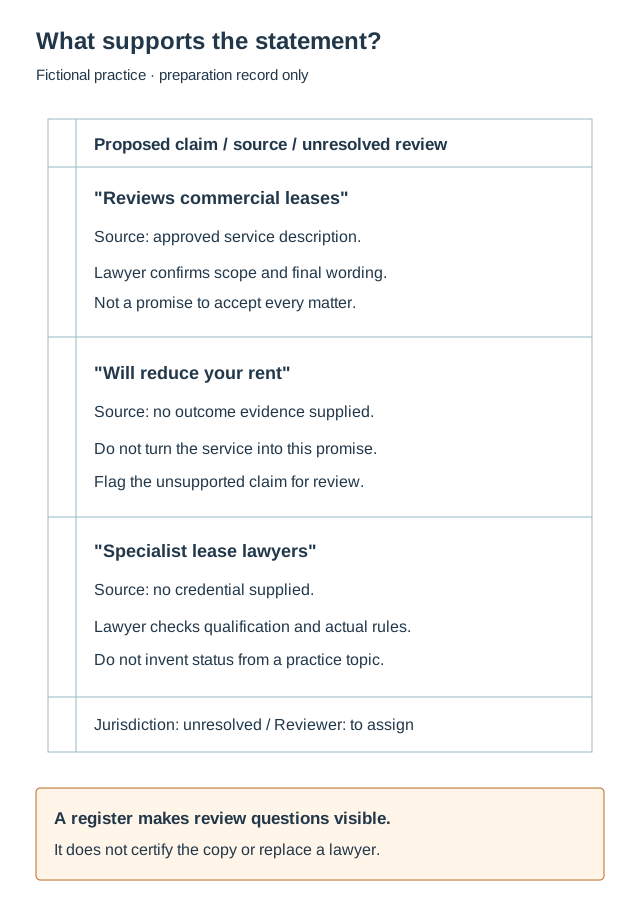
The comment to Model Rule 7.1 explains how truthful statements can still mislead through omissions or unjustified expectations. The register helps the lawyer find the claim and its source. It doesn’t determine whether a statement or disclaimer meets the firm’s requirements.
3. Prepare a referral information sheet
An accountant asks where a business owner can learn about your lease-review service. An agent could prepare a short sheet from the approved public page and office instructions, pointing the reader to the page and its inquiry process.
During review, add the real approved link and contact details. Missing details stay visible; a fictional number or link would make the sheet look finished while sending the reader nowhere useful.
Include this among law firm marketing ideas when other professionals request shareable service information. A referral agreement, fee or endorsement belongs in a separate firm review, outside the public-information brief.
4. Build an educational event invitation from the actual agenda
Our online session introduces questions about commercial leases. Its agenda covers duration, renewal and repair responsibilities, using general education rather than reviews of attendees’ documents.
Ask the agent for an invitation and a separate missing-facts list. The central draft could read:
Join our introduction to questions you can discuss when reviewing a commercial lease. We’ll cover where to find information about the lease period, renewal arrangements and repair responsibilities. Individual matters need a separate conversation with the firm.
The firm supplies the confirmed date, speaker biography, registration link and lawyer-required wording. The agent can flag missing fields. Inventing credentials or calling the event continuing legal education would add facts the brief doesn’t establish.
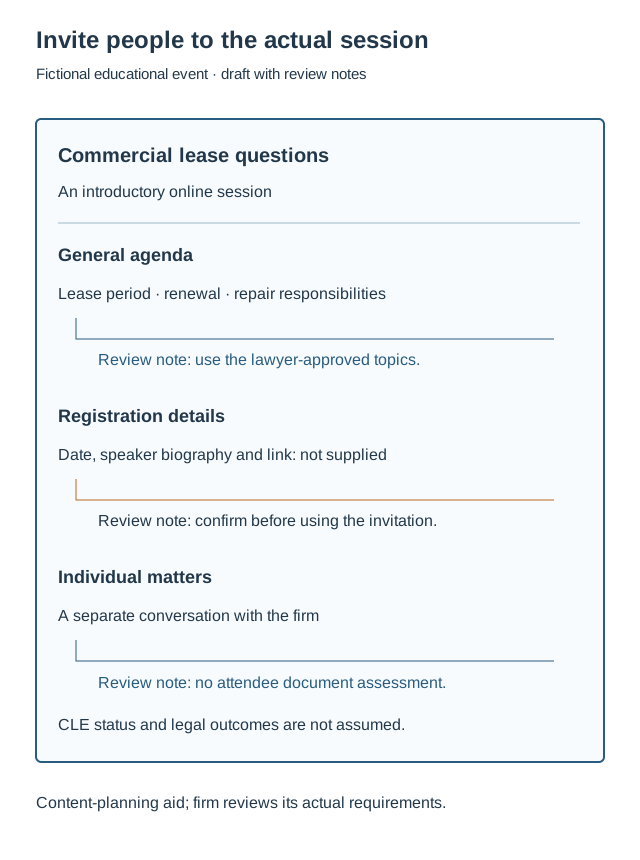
The same agenda can support a registration FAQ. To “Will you look at my lease during the session?”, a proposed answer can explain that it covers general questions and doesn’t review attendees’ documents. Add the firm’s approved instructions for asking about a separate conversation.
Have the responsible lawyer review the invitation and FAQ together. Keep this preparation note with them:
Individual lease review isn’t in the agenda. Separate inquiry instructions still needed from the firm. Event lawyer to check both drafts.
Choose this job when the invitation and registration page need consistent descriptions of the same session.
5. Prepare an inquiry acknowledgment without evaluating the matter
The visitor wants service information and asks whether the firm will accept their matter. The agent’s marketing task is to prepare the approved next-step instructions. Acceptance remains the firm’s decision.
Using our fictional public page, a draft could acknowledge the request, point to the inquiry process and ask the visitor to contact the office by the method listed there. The actual link and route still need to be supplied by the firm.
An internal note should preserve what remains open:
Visitor requests lease-review information and asks about acceptance. Firm hasn’t assessed the matter. Staff to confirm the appropriate inquiry instructions from the public service page.
No lease or dispute details are needed to prepare that acknowledgment. Don’t ask visitors to submit matter documents through an ordinary public marketing form for this workflow.
Law firm marketing automation could help where repeated inquiries receive inconsistent instructions. Define the public response and the staff handoff first. An instruction to “qualify the lead” leaves unclear whether the agent is being asked to make a decision that belongs to the firm.
Choose a usable public source
Bring an approved education note, service description or event agenda. Compare the proposed output with it and identify the reviewing lawyer and unresolved decisions. Use fictional inquiries while evaluating the workflow.
A BoastOS BoastAble services discussion can begin with that public-information task and the material available to prepare it.
Prepared with AI assistance for BoastOS. The firm, education notes and messages are fictional. These are proposed marketing workflows, not legal advice, reviewed jurisdiction-specific advertising, client outcomes or tested BoastOS features.