

5 ways AI agents can help property managers attract owners
An owner asks who will approve a repair while they’re overseas. Your website says you “handle everything,” but that doesn’t explain what the owner can expect when a contractor sends a proposal.
Start AI marketing for property management companies with questions like that. A configured agent can retrieve the relevant service documents, assemble an explanation and identify what your manager needs to confirm. The work becomes useful when an owner can make a more informed choice about hiring you.
These five jobs concern attracting owners of long-term residential rentals. The company arrangements, messages and maintenance story are fictional examples of proposed workflows. They aren’t measured customer results or demonstrated BoastOS features. Record access requires approved connections and permissions.
1. Explain the decisions an owner keeps
An owner guide should explain how a management arrangement works. To prepare one, have the agent compare the questions prospects ask with your approved services, process documents and agreement provisions. If those sources conflict, resolve the difference before putting an answer on the website.
Consider a fictional firm that seeks owner approval before commissioning ordinary maintenance. A prospect asks whether they will see the contractor’s proposal. The process document says the manager sends it through the agreed contact route and records the owner’s decision before arranging the work.
That supports a specific draft:
For work requiring your approval, we send the contractor’s proposal through the agreed contact route. We record your decision before arranging the job. During your consultation, we’ll also explain our separate process for urgent situations.
Your manager needs to check both processes against the actual arrangement. Neither the agent nor a general example can establish the company’s authority to act.
The NARPM Code of Ethics requires its members to outline responsibilities in written agreements and communicate with clients regularly as agreed. Those standards help explain why a clear guide matters. They don’t determine your firm’s approval process, and they aren’t a claim that every property manager belongs to NARPM.
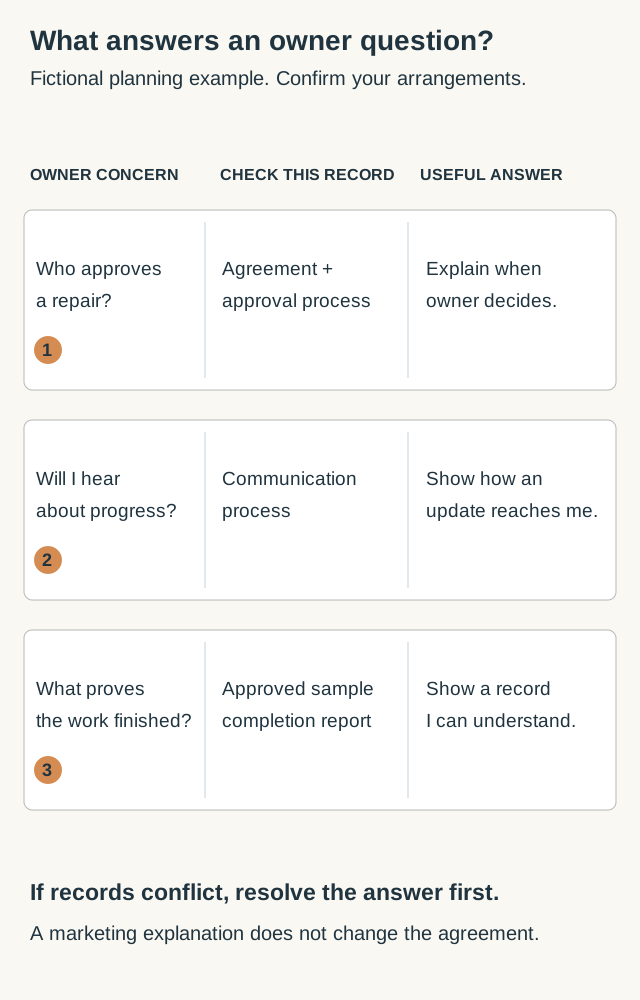
After review, the agent can carry the answer into the owner guide, the relevant service page and a consultation handout. Keep each explanation consistent with its source. An owner researching property management marketing claims should be able to discover what “handled for you” involves and where their own decisions remain.
2. Compare your services using the owner’s questions
“Leasing-only” and “ongoing management” are package names. The practical comparison is who does what after move-in.
Ask the agent to assemble your service descriptions into a table. It should use approved information and flag missing answers for your team. Here is a worksheet to complete for your own company:
| Question to answer | Leasing-only service | Ongoing management |
|---|---|---|
| Who receives maintenance enquiries after move-in? | Confirm the contact and responsibility | Confirm the contact and responsibility |
| What reports does the owner receive? | Name the actual reports | Name the actual reports |
| What work remains with the owner? | Explain the service boundary | Explain the service boundary |
Replace every worksheet instruction with a checked answer before sharing it. This is useful when prospects understand each package separately but can’t see which arrangement fits the involvement they want.
3. Show how a maintenance job was communicated
A repaired-gutter photograph says little about the communication an owner received. A documented account can show what information reached them and how a decision became a completed job.
In this fictional example, a resident reports a leaking gutter. The manager obtains a contractor’s proposal, sends the owner the relevant information, records their decision and later provides a completion update. Ask the agent to place the permitted records in that order.
Now examine what the file actually proves. A sent proposal isn’t recorded approval. A photograph needs to belong to this job. The completion report needs to show whether the owner received an update. Have the agent list gaps for the team instead of filling them with a plausible chronology.
Once confirmed, the public account can explain the information shared at each stage. For example, describe what the proposal allowed the owner to decide and what the completion update showed. That makes the story useful to a prospective owner comparing reporting styles.
Keep private correspondence, resident identities and access details out of public material unless their use is appropriately authorized. The NARPM code also requires members to protect confidential information. A public case study can explain a process without exposing the underlying private file.
The finished account should stick to the documented communication. Don’t attach invented savings, faster-repair claims or a testimonial nobody supplied. Let the prospect ask whether their own agreement would include this kind of reporting.
4. Follow up on the question a consultation left open
Suppose an owner says, “I travel for work. How would you reach me for an approval?” The meeting ends before your team explains the available options.
With the authorized consultation note and current contact guidance, the agent can prepare a reply that returns to that question:
You asked how approvals would work while you’re travelling. Here are the contact options we can discuss when setting up your management arrangement.
A manager checks those options and the escalation process before sending. A delayed reply mustn’t become assumed permission to commission work. Property management marketing automation helps continue this sales conversation by finding its unresolved question and the information needed to answer it.
5. Prepare a local briefing when there is a real change to explain
Useful property management marketing ideas can come from an official local notice. Start with the notice itself rather than a proposed article title. Does it raise a relevant question for the owners you serve?
Imagine a local authority announces a change to an administrative process. An agent can retrieve the original notice, record the effective date and organize the questions it raises for your properties. A qualified reviewer then determines its applicability and the explanation your company can provide.
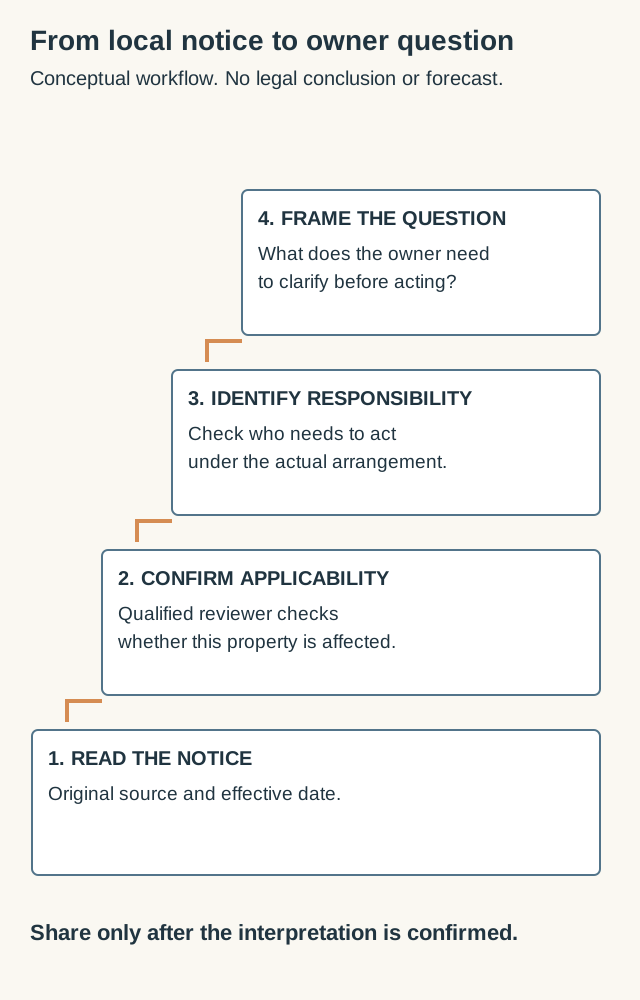
The briefing should help an owner understand what is confirmed, what requires checking and whom to ask. Keep the original notice linked so readers can see the source. Don’t let the agent turn an administrative change into a promise of higher rents, investment returns or guaranteed compliance.
If the notice doesn’t apply to your audience, there may be no briefing to produce. When it does, an explanation of the next relevant question is more useful than a broad article implying every local owner needs to act.
Choose the explanation owners need most
Use an owner guide when responsibilities are unclear. Build a service comparison when prospects struggle to distinguish your packages. A documented maintenance story helps show communication in practice; consultation follow-up and local briefings address narrower questions.
Bring one recurring question and the records that answer it to a BoastOS BoastAble services discussion. Your first workflow should help an owner choose and give your manager an explanation they can check.
Prepared with AI assistance for BoastOS. The workflows and examples are proposed applications, not measured customer results.