
6 ways AI agents can help a furniture store sell the room
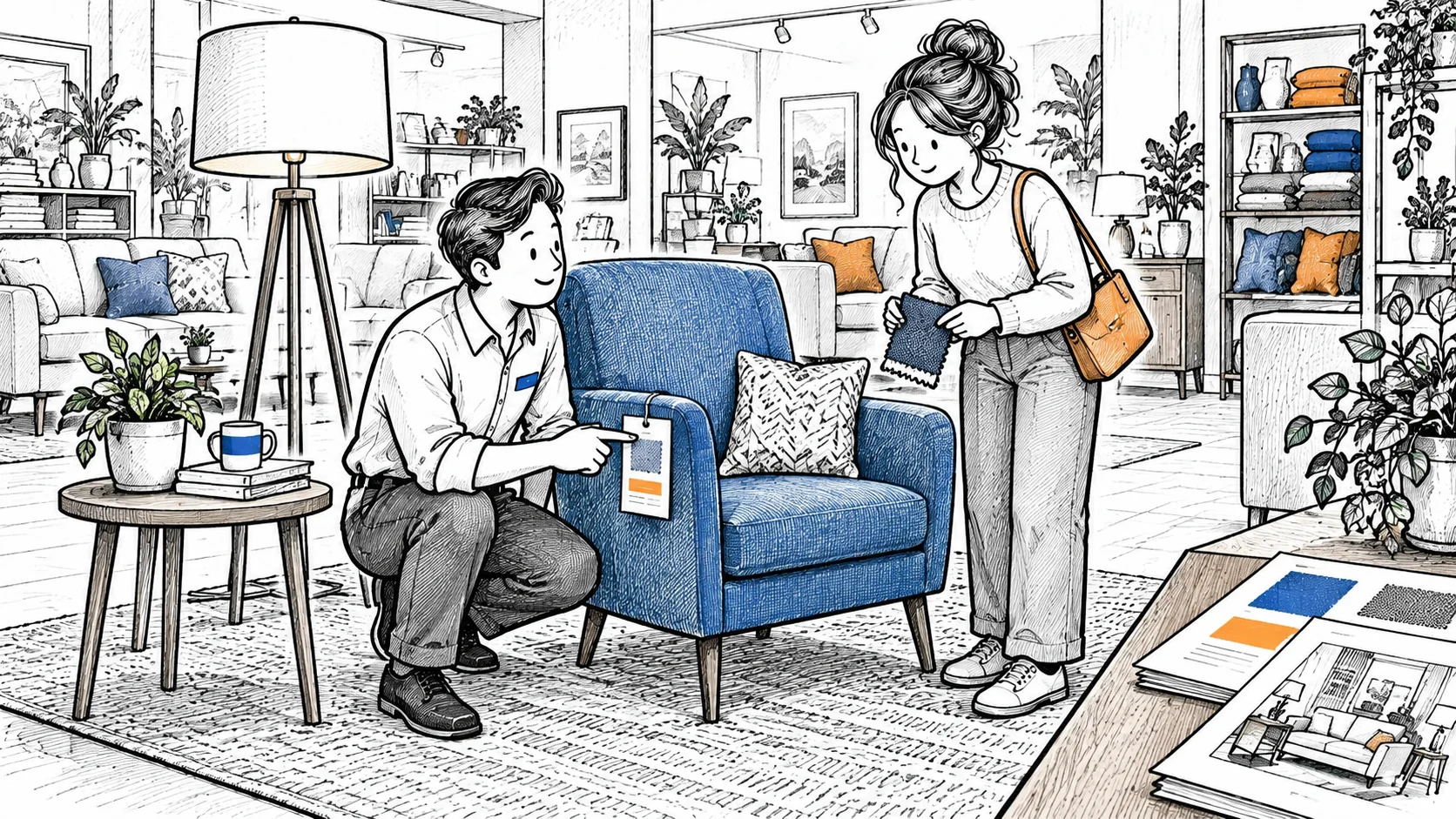
In the showroom, a shopper can sit in the reading chair, hold a fabric swatch beside it and ask about the lamp. A product photograph gives the online visitor less to work with. They may not even know which pieces in the scene are available separately.
AI marketing for furniture stores can help carry those explanations from the showroom to the website and campaigns. With access to merchandise records, approved policies and suitable tools, an agent could gather information across several products, find unanswered questions and prepare drafts for your staff to check.
The six jobs below use fictional merchandise, visits and promotions to show what that work could involve. They are proposed applications, not recommendations for particular products or claims about tested BoastOS features and customer results.
1. Explain a feature without inventing its benefits
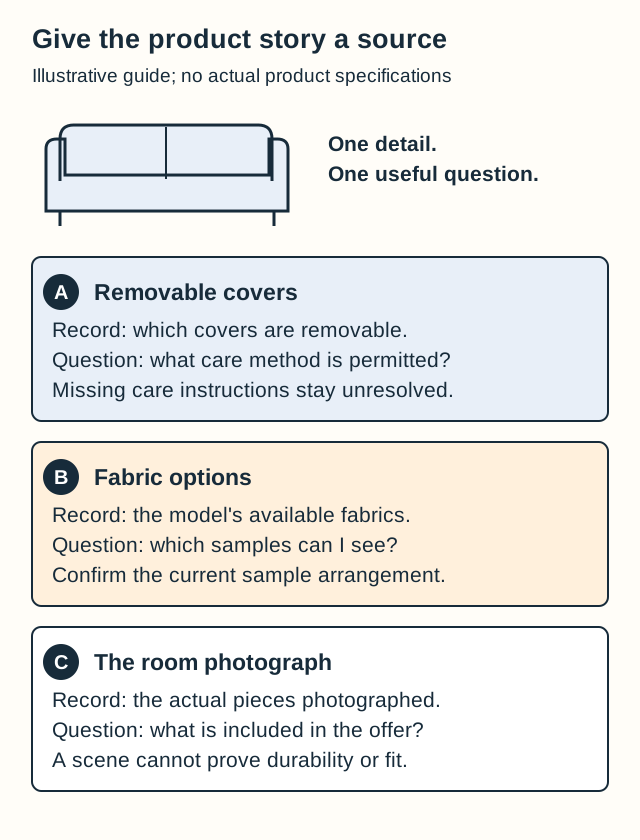
A manufacturer sheet says the sofa’s seat covers are removable. That gives a product story something concrete to explain. It also raises a question the sheet may leave unanswered: how should the customer clean them?
Ask the agent to retrieve the care instructions for that model and place them beside the feature description. If the instructions are missing, the merchandise team needs to obtain them. Removable covers do not, by themselves, establish that the fabric is machine washable or stain resistant.
The same method can help with other details on the product page:
| Source material | What the draft can explain | What still needs checking |
|---|---|---|
| Manufacturer sheet identifying removable seat covers | Which covers come off | The cleaning method permitted for this model |
| Record of fabric options | Which choices a shopper can compare | Samples ready to view and finished-item availability |
| Photograph of the actual display | The pieces shown together | Evidence for durability or fit claims, and whether accessories are included |
The reviewer should receive the sources with the draft. That lets them check the particular model and the covers being described rather than approve a plausible explanation from memory.
The FTC’s advertising and marketing basics says advertised claims must be truthful and supported by evidence. A removable-cover fact gives you no basis to add “stain-proof.”
Start with a product your staff know. Let its actual features and customer questions determine the story. “Perfect for any home” adds little to that conversation.
2. Show how the reading corner comes together
Our fictional display has a chair, a floor lamp and a side table. All three are sold individually. A room campaign can show the arrangement without implying that buying the chair includes the other pieces.
An agent could assemble a room page from the actual display photograph and the current records for each item, then draft an email introduction and social captions linking to it. The page identifies the pieces and links to their own details. A visitor interested in the chair can find it without having to inquire about the entire scene.
Of the furniture store marketing ideas here, this one starts with a display the store has already arranged. Preserve the identity of the merchandise. A generated room that changes the chair’s legs, fabric or proportions is showing the shopper a different product.
Check the campaign item by item. If the lamp is sold out, revise the invitation before telling people they can shop the whole corner.
3. Prepare the upstairs-sofa question for the delivery team
“Can you get this sofa to our upstairs room?”
The customer needs an answer about this item and destination. A delivery-fee link supplies only part of it. An agent could use the store policy and logistics team’s intake questions to prepare a delivery-inquiry page and help a salesperson gather the relevant details.
Use the following as an inquiry worksheet, with your team’s actual requirements replacing these suggested fields:
- Product: the exact model and configuration being considered.
- Destination: where the customer wants the item delivered.
- Access question: what the customer wants the logistics team to assess.
- Next step: who reviews the inquiry and how the customer receives a confirmed answer.
The agent can assemble the question. The responsible team decides whether further information or an assessment is needed before making a commitment.
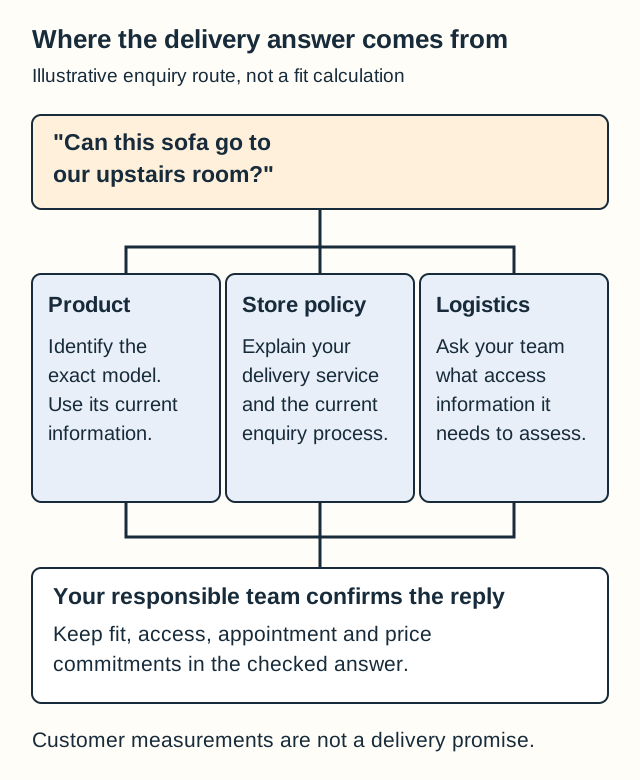
Rough measurements, a room photograph and a standard product dimension do not automatically establish that the sofa will fit along the delivery route. Keep prices, appointments and access commitments in the team’s checked reply. On the page, explain how the customer can obtain that reply rather than imply that submitting a form confirms delivery.
4. Keep a floor-model offer tied to the actual sofa
The approved promotion covers one display sofa, with its condition described on the offer page. A caption advertising savings on the “sofa collection” has widened it.
Furniture store marketing automation could compare captions and emails with the approved offer and flag that discrepancy. The promotion owner checks the eligible item, condition, price, terms and availability. The corrected caption introduces the particular sofa and links to the full details.
After it sells, update the active offer. A shopper following yesterday’s caption still needs to see the item’s current status.
5. Follow up about the fabric sample
During a hypothetical visit, the customer compared two reading chairs and requested a blue fabric sample. They agreed to receive an update about it. Those notes give the agent a specific reason to prepare a message.
If the salesperson confirms that the sample is ready, the draft could say:
The blue fabric sample you asked about is ready to compare with the two reading chairs you viewed. Would you like to arrange another visit?
The salesperson checks the sample, the inquiry’s current status and the customer’s contact preference before sending. If the fabric is still on order, send that update instead. A generic sale announcement would leave the customer’s question open.
6. Use unanswered questions to decide what the product page needs
Another visitor likes the chair in a display photograph but asks whether it comes in other finishes. The page does not say. The store has a useful content brief before it needs another campaign idea.
An agent could collect permitted inquiries, remove personal details and organize the remaining questions by model. The merchandise team then supplies the actual finish choices, samples available to view and instructions for asking about an option. An unanswered question stays with that team until it has a checked answer.
This differs from following up with one visitor. The goal is to improve the product page for the next person with the same question. Two chairs sharing a photograph may have different choices, so the explanation must remain attached to the correct model.
Once the page is updated, staff can use it in their replies. Furniture store marketing begins to benefit from questions already reaching the showroom, without inventing demand statistics or assuming that every inquiry calls for a new article.
Start beside a product card
Choose a question the store can answer now. For the removable covers, that requires the right care instructions. For the reading-corner campaign, it requires a faithful photograph and current records for all three pieces. For an upstairs delivery inquiry, it requires the logistics team’s process.
Bring the product card and recurring question to a BoastOS BoastAble services conversation. Use them to choose the first explanation or campaign your team can prepare and verify.
Prepared with AI assistance for BoastOS. The workflows and examples are proposed applications, not measured customer results.