

6 AI marketing jobs for a specialty ecommerce catalog
A product page says the notebook is lined. The picture shows plain paper. The promotion links to the smaller size. Each piece looks reasonable until a shopper tries to buy the item.
For a specialty retailer, ecommerce marketing depends on details that belong to a particular product: the variant, what comes in the package and what the customer can order now. AI marketing for ecommerce businesses can begin with work that connects those details to useful copy and campaigns.
These six jobs describe potential agent applications using suitable tools and authorized information. They are not verified BoastOS features. We will use a fictional notebook shop to make the choices concrete; none of the examples reports an actual test or sales result.
1. Assemble product copy from the exact variant
Start with two fictional catalog records. The A5 notebook contains 80 lined sheets. The smaller B6 notebook contains 60 plain sheets. Both have their own photos and product identifiers.
An agent could collect the approved specification, select the matching images and prepare a product-page draft for one identifier at a time. It would return a source trail with the copy, including questions about missing or contradictory inputs. The point is to give the merchandiser a draft they can check against the item being sold.
Here is a small evidence worksheet for the A5 listing:
| Proposed statement | Input needed | Editorial decision |
|---|---|---|
| A5 notebook with lined paper | Approved A5 specification and matching interior photo | Use when both refer to this variant |
| Contains 80 sheets | Approved pack specification | Keep the stated unit; do not quietly change sheets to pages |
| Pen included | Confirmed package contents | Omit if the pen is only a photography prop |
| Fits every jacket pocket | Evidence for a broad fit claim | Replace with verified dimensions rather than inventing a guarantee |
Ask the agent to attach this record to the proposed listing. If a photo conflicts with the specification, it should identify the conflict for the merchandiser. Choosing whichever input makes the nicest copy would conceal a catalog problem.
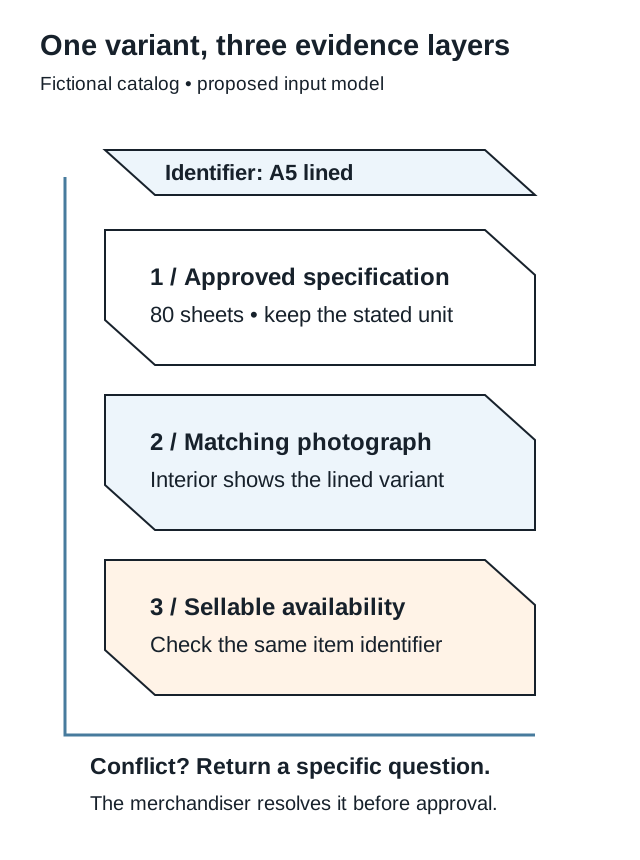
This is a sensible first job when product facts are scattered across files or variants are easy to confuse. A clean source record matters more than the number of descriptions the agent can produce. Review a handful of listings and check whether each statement points to the right item before expanding the work.
2. Build a comparison that admits what is unknown
Which notebook should a shopper choose? A comparison can answer that without declaring one universally better.
Give the agent both approved records and ask it to prepare a guide around the differences the shop can substantiate. In the fictional catalog, the A5 option has lined paper and 80 sheets; the B6 option has plain paper and 60 sheets. Verified dimensions can help a reader judge the space each occupies. A larger writing area and a smaller physical size are different considerations, not a ranking of quality.
The agent could draft those comparisons, link each item and list missing evidence. If neither record establishes binding durability, the guide should not call one more durable. The shop can obtain that information or leave the claim out.
Useful ecommerce marketing ideas sometimes come from explaining a modest distinction well. A concise selection guide may be enough here. Lengthening it with imagined buyer personalities or unsupported superiority would make the choice less trustworthy.
3. Turn repeated questions into useful page updates
“Does it come with a pen?” and “Is it boxed for gifting?” point to package-content questions. They should not be mixed with a different question about how the paper behaves when wet.
An agent could group permitted customer questions by product identifier, then prepare a proposed page update for each theme. Keep the original questions available to the reviewer so an unusual request does not disappear into an overconfident summary.
For the fictional A5 notebook, the output might say: Package question: shoppers asked whether the pen in the image is included. Source gap: the approved contents record does not mention a pen. Next action: the merchandiser confirms the contents, then approves a sentence beside the image.
That is a complete editorial task with an unresolved input. It is not permission to invent the answer. Questions about water resistance need evidence specific to that claim; grouping them does not establish a product property.
This job suits a shop that answers the same product question repeatedly but has not yet made the answer clear on the page. Use aggregate themes in marketing work rather than exposing private customer messages or contact details.
4. Prepare a message for an actual customer state
A shopper requests a notification when the B6 plain notebook returns. A general notebook promotion is not the message they asked for.
With permitted access, an agent could connect that request to the exact variant, check its current availability and prepare the requested notification. The draft should link to the B6 plain listing. If that item remains unavailable, the agent should hold the notification rather than substitute the A5 lined notebook.
Other lifecycle messages need their own purpose and eligibility rules. A welcome message, an order update and a repeat-purchase promotion serve different situations. Ecommerce marketing automation should preserve those distinctions, including the shop’s permission and opt-out process. A canceled or returned order should not trigger copy that thanks someone for enjoying an item they did not keep.
Choose this job when the team can identify the relevant customer state reliably. The store remains responsible for who receives a message and when it is sent. A polished draft cannot repair an incorrect audience record.
5. Design a product-message test before writing variants
You want to know whether shoppers respond to writing space or portability. Producing several attractive ads is only part of that job.
For the fictional A5 notebook, an agent could prepare two messages from the same approved facts: one emphasizes room for notes; the other explains its verified size. Both should show the same item. Neither should promise a pocket fit that the shop has not established.
Before generating the assets, ask for a comparison plan:
| Decision | Proposed test design |
|---|---|
| What changes? | The emphasis of the message |
| What stays fixed? | Product variant, price, offer, destination and placement |
| What is observed? | A defined action, such as completed orders, with the same tracking definition |
| What needs review? | Audience assignment, timing, tracking and whether the test can support a conclusion |
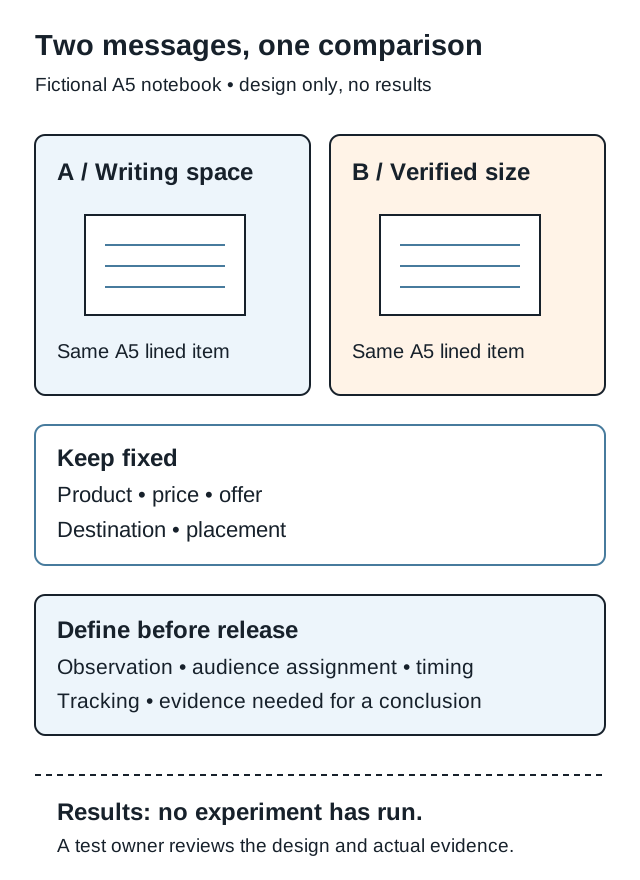
The agent could organize the approved plan, prepare the two drafts and later assemble the actual observations for review. It should not fill the empty result column with a forecast presented as a finding.
If you change the discount or product along with the message, a difference in orders cannot be cleanly attributed to wording alone. A specialist may also decide that the available traffic is insufficient for a reliable comparison. In that case, use the exercise to improve the questions you ask, not to claim a winning ad.
6. Coordinate a promotion with the stock it actually uses
The shop plans a promotion for the A5 lined notebook. Someone adds a B6 plain image to the social draft because it looks better. Another person reuses yesterday’s availability note.
An agent could collect the selected item identifier, current sellable stock record, approved offer and matching assets into one campaign packet. It could flag the wrong photo and stale availability before preparing the email and social versions. The reviewer then has a specific mismatch to resolve.
Availability should be checked again at the point the shop approves the campaign for release. If the promoted variant is no longer sellable, the owner can pause or revise the campaign. The agent could identify affected drafts and links; it should not change the product, price or offer on its own.
This job is useful when several channels share a promotion and a product change needs to reach all of them. Begin with one campaign so you can see whether the packet remains accurate as the catalog changes.
Choose the job with the clearest source
If the catalog is inconsistent, start with one variant and its evidence worksheet. If those records are dependable, customer-question updates or a requested restock notification may be easier to evaluate. A message experiment belongs later, when the team can define and review a meaningful comparison.
Bring a real product record or recurring campaign problem to a BoastOS BoastAble services conversation. The useful starting point is a task your team can check, with a clear answer about what the agent should do when the source is missing.
Prepared with AI assistance for BoastOS. The notebook catalog, customer situations and experiment are fictional illustrations, not customer results or verified BoastOS capabilities.