

7 Marketing Jobs AI Agents Can Help Real Estate Teams Handle
Revised October 5, 2026.
The listing description is finished. You still need the email, photos for the social posts and an answer to a buyer’s parking question. Then Sunday’s open house gets cancelled, and some of that material needs changing.
That is a useful starting point for AI marketing for real estate agents: the work around a listing, inquiry or client update that your team can describe and check. A connected agent might collect the current information, prepare the material and return missing details to staff. Its capabilities depend on the tools, access and instructions you give it.
These seven jobs are proposals to evaluate, not tested BoastOS features. The property, messages and events used below are fictional. They are not live listings or customer results.
1. Prepare a listing campaign from one verified property record
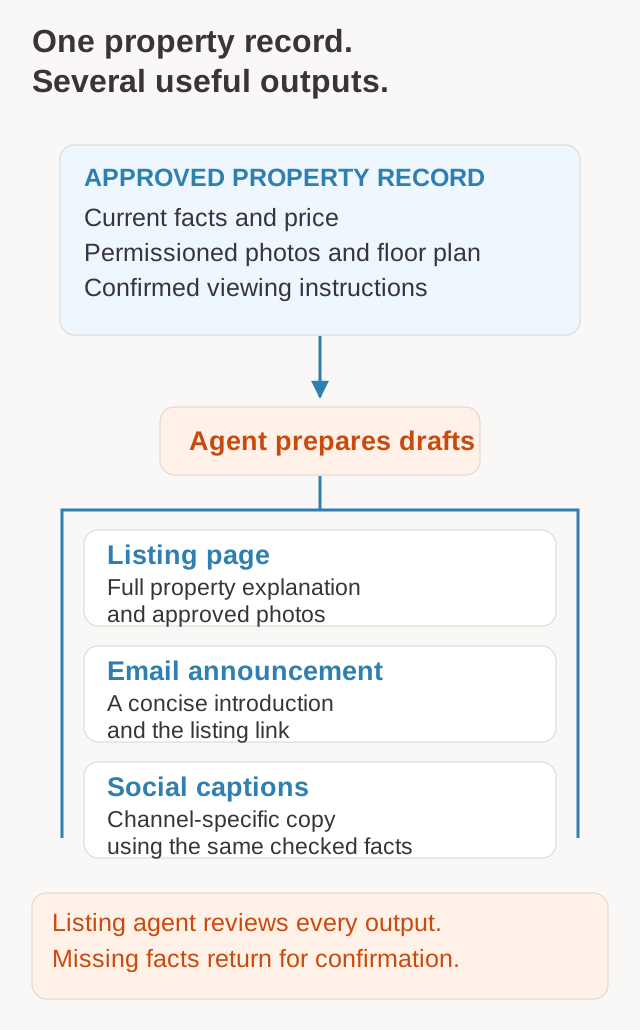
If the email comes from the listing sheet and the social caption comes from an older description, they can disagree before either is published. Give the agent one current record for the campaign and let the listing agent resolve anything that is missing.
Here is our fictional condominium record:
- Two bedrooms and two bathrooms.
- Approved asking price of $425,000.
- One assigned parking space included.
- Viewings by appointment through the team’s approved request link.
- Approved floor plan and selected photos.
- Monthly association fee awaiting confirmation.
Ask for the listing-page draft, email announcement and social captions as one packet. Include the selected assets, approved links and required brokerage information. The unresolved association fee should come back as a question for the listing agent; leaving it out of a source doesn’t establish that there is no fee.
An email opening might read:
View the photos and floor plan for this two-bedroom, two-bathroom condominium, offered at $425,000 with one assigned parking space. Contact the team through the viewing request page to arrange an appointment.
The listing page can explain the confirmed facts in more detail. A social caption may focus on the floor plan and send readers to that page. Different emphasis is fine as long as the property information stays the same.
Have the listing agent check the packet against the current record, including the images. NAR’s broker guidance warns about AI-altered photos that misrepresent a property and calls for review before release. This assignment suits teams that keep assembling the same listing facts for several channels. Contradictory records need the team’s attention before they become campaign copy.
2. Research neighborhood content with traceable sources
The question is about the train timetable, but the draft describes an “easy commute.” That doesn’t help a buyer work out which service to take. Give the agent the questions you want the guide to answer and ask for the official source behind each one.
For a station guide, that means the transport operator’s timetable. Resident parking questions go to the municipality’s information; school attendance boundaries go to the district. Return a linked draft with access dates and a list of details still needing confirmation, then have the team read it against the source pages.
NAR recommends objective information rather than personal judgments about neighborhood safety or school quality. Keep those judgments out of the descriptions. Choose this job when you keep repeating useful local research and would like a checked resource to send people.
3. Prepare inquiry follow-up that answers the question
“Is there step-free access from the street to the front door?” The buyer needs an answer about the approach, not another copy of the floor plan. In this example, the approved property record doesn’t describe that route.
The agent can find the inquiry, check the record and prepare a response for staff:
We’re checking the route from the street to the front door with the listing agent. We’ll follow up when those details are confirmed.
The note for the listing agent could read: “Buyer asks about the route from street to front door. The floor plan and property record don’t establish it. Please confirm the approach before we answer.” That tells the reviewer exactly what is missing.
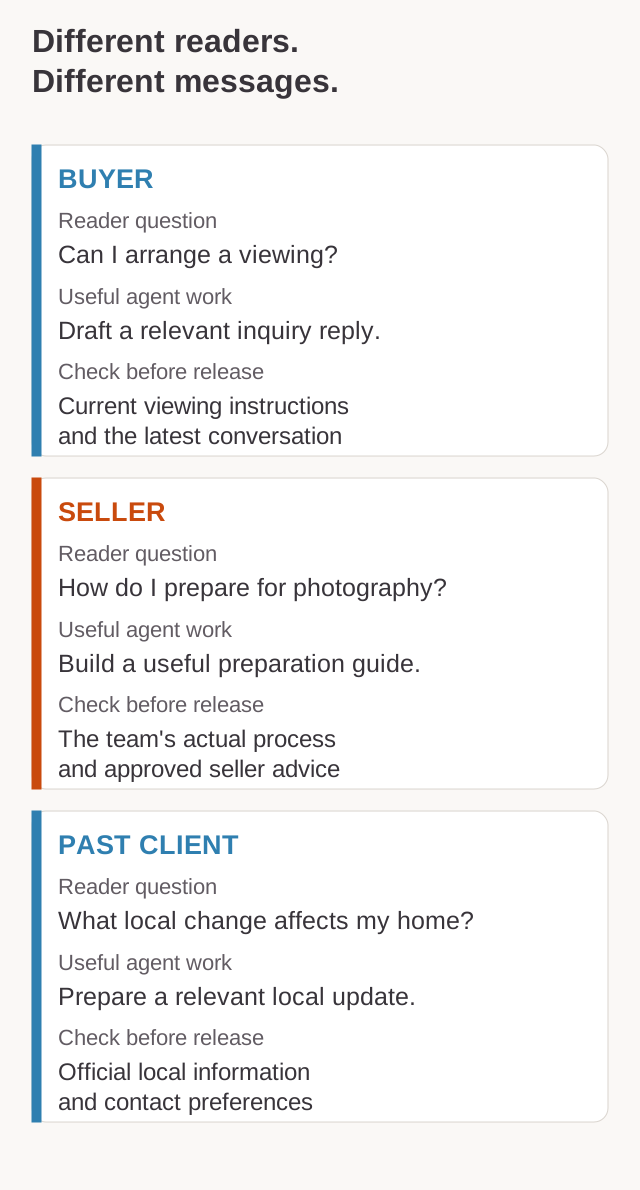
A parking inquiry can use the space already recorded. A viewing inquiry can use the confirmed request instructions, with an appointment time left for staff to arrange. Check the latest conversation before sending either. I’d try this job if questions are scattered across forms and email, and judge the first run by the questions it helps the team resolve.
4. Develop campaigns around prospective sellers’ questions
For seller-focused real estate marketing ideas, use the questions that come up before a listing begins. Photography preparation, documents to gather and the launch process each give a prospective seller something practical to understand.
For photography preparation, use the team’s approved advice alongside the photographer’s requirements. The proposed packet is a practical guide, a short email introducing it and social posts about individual preparation questions. Ask the agent to show where the advice comes from and return any disagreement between the sources to the team.
Suppose the preparation notes disagree about when a room must be ready. The draft packet should name that disagreement for the photographer and listing agent, rather than choose a deadline on its own. One settled answer can then be used in the guide and the introductory email.
An experienced agent checks the packet against the actual process. Give any market statistics their source and reporting period, and leave out unsupported predictions of the reader’s selling price. I’d choose this campaign when the seller questions are recurring but the team has no good resource to send.
5. Find listing material affected by a status change
Sunday’s open house is cancelled after the property goes under contract. The listing page has changed. Saturday’s scheduled post still invites people to attend, and an unreleased email carries the same invitation.
Have the agent search the team’s campaign inventory using the confirmed change. In this fictional example, two notes in the returned queue could say:
- “Saturday social post: scheduled, still promotes Sunday’s open house. Hold for the listing agent’s revised instructions.”
- “Announcement email: not sent, includes the old invitation. Hold for review.”
The search also needs the listing page’s event notice and any paid material referencing the event. Keep the affected text beside the proposed action. Material already public may need a correction; an unreleased invitation may simply need to be held. That distinction helps the team decide what to do with each item.
Have the listing agent confirm status wording and release decisions under the brokerage’s requirements and local MLS rules. Start with that review queue before permitting automatic changes. An agent won’t reliably find every mention on the internet, and third-party platforms may need separate action.
I’d try this real estate marketing automation job if several active listings mean frequent changes. First establish where the material lives. The agent needs that inventory to find the team’s posts, emails and ads.
6. Maintain useful communication with past clients
A verified municipal change to yard-waste collection gives you a specific update to share with people who chose to receive local notices. The agent can gather the source, prepare a short email linking to the new schedule and identify the approved audience.
The team checks the update and contact preferences before approving it. A past client may no longer own the same home; an old transaction isn’t proof of their current address or interests. Keep the message factual rather than inventing a personal connection.
Choose this job when worthwhile updates keep getting postponed. The topic still needs a reason to matter to its recipients. Producing a generic homeowner email faster doesn’t supply that reason.
7. Review marketing performance alongside the inquiry record
Several people ask whether parking is included after seeing a listing campaign. Have the agent collect those questions with the recorded campaign sources, viewing requests and follow-up outcomes. The report should preserve the questions so the listing agent can inspect what people couldn’t establish from the material.
Perhaps the parking detail is hard to find. Perhaps the inquiries concern something the description doesn’t cover. Read the actual conversations before choosing a page change; a count of inquiries won’t explain the difference.
Keep known sources apart from unknown ones and resolved questions apart from those still waiting for an answer. Record a viewing request as a request, not a completed viewing. A later sale doesn’t establish that a caption caused it.
Use this when the information exists across your tools but rarely gets reviewed together. If outcomes aren’t recorded, establish that habit before asking for the report.
Start with the work your team can check
For a listing-heavy team, campaign preparation or status-change checks may be the first choice. For a team seeking sellers, a focused educational campaign may be more useful. A relationship-led practice may prefer past-client updates.
Pick one job with a dependable source and an agent or broker available to review the output. Inspect a small run: were the facts right, did the messages answer the actual questions and did unresolved information come back to the team before release?
Brand context for marketing agents explains how to supply the relevant business information. To discuss a first reviewed workflow for your team, visit BoastAble implementation services.
Prepared with AI assistance for BoastOS. The workflows and examples are proposed applications, not measured customer results.