

5 agentic AI jobs that keep an agency campaign moving
The copy is ready. The designer has a different brief. The account lead is waiting for a client decision that nobody has asked for yet.
An agency can produce plenty of material and still have a campaign stuck between people. AI marketing for marketing agencies is worth examining at those handoffs. A proposed agent could gather the relevant source, prepare the next deliverable and flag an unanswered decision. Someone still needs to own the work and approve what goes to the client.
Here are five jobs for small marketing and creative agencies. They describe potential applications with suitable tools and permitted access, not features already demonstrated by BoastOS. The supplier, workshop campaign and reporting figures below are fictional examples.
1. Turn audience research into questions the brief can answer
Imagine a supplier whose public inquiries include questions about delivery timing. An agency wants to develop a campaign around that topic. An agent could collect the permitted inquiries and prepare a research note with links back to each source.
Ask it to distinguish what people actually said from what the team thinks the pattern might mean. A useful note has three parts:
Source: A prospective customer asks whether an order can arrive before a specified event.
Possible theme: Delivery information may matter when someone is planning for a deadline.
Question for the campaign team: Can the supplier substantiate the timing it wants to advertise, and where should readers check the details?
That note can inform agency campaign briefs without turning one inquiry into an invented audience profile. It does not establish how many buyers share the concern or whether a delivery message will perform better. Broader audience claims need broader evidence.
The strategist can review the sources, decide whether the theme deserves attention and request missing information from the client. Keep client-only research separate from another account’s material. A convenient search across everything the agency holds would be the wrong starting point if those sources cannot be shared.
2. Carry one campaign brief through each handoff
A fictional workshop campaign has an approved proposition: attend a demonstration and ask questions. The writer prepares an invitation. The designer needs the registration details. The account lead needs to know who will approve the final page.
An agent could maintain a handoff record around that campaign. Give it the approved brief and ask it to compare the next deliverable with the decisions already recorded. Missing information should become a specific question rather than an improvised answer.
Try this small audit before automating the handoff:
| Handoff question | What the fictional campaign reveals |
|---|---|
| Which input is current? | Approved workshop brief, version 3 |
| What should happen next? | Designer prepares the registration page from that brief |
| What is missing? | Confirmed registration link and named client approver |
| Who can resolve it? | Account lead requests both details from the client |
| What proves completion? | Page revision and recorded approval refer to the same brief |
The output is a work assignment with a visible gap. It is not a finished landing page pretending the gap was resolved. The agent could prepare the assignment and collect the response; the team must decide whether the new information changes the brief.
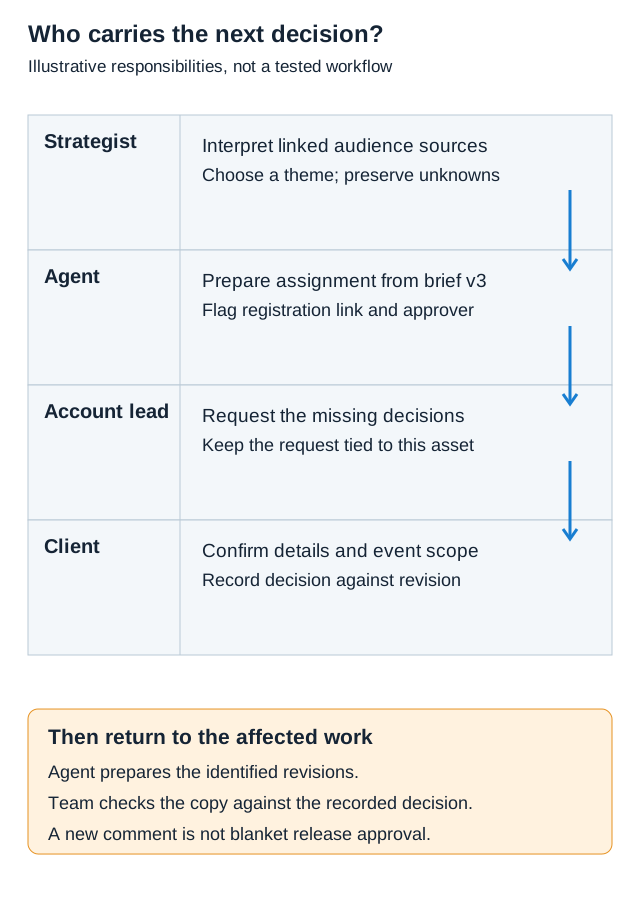
Clear ownership also makes failures easier to find. If the client changes the event format, the account lead can identify the affected invitation and page. The agent could list those revisions for review. It should not treat a new comment as permission to replace every approved asset.
Agency marketing automation becomes more useful when a handoff has a defined output. “Keep the campaign moving” is too vague to check. “Prepare the page assignment from version 3 and flag missing registration details” gives the team something it can inspect.
3. Adapt the approved idea without changing its promise
The workshop invitation now needs an email and a short social post. This is a focused adaptation job: change the presentation while preserving what the event actually offers.
For the fictional campaign, the approved scope is a demonstration followed by questions. An email can make room for the topic and registration information. A social post may need to be shorter, but it should still avoid implying that attendance includes individual consulting.
| Channel | Proposed treatment |
|---|---|
| Explain the demonstration, name the confirmed presenter and link to registration | |
| Social | State the demonstration topic and direct readers to the same event page |
The agent could prepare both drafts from the approved campaign version, with a source reference attached to each. The reviewer should compare the promise, not just the tone. An attractive phrase such as “get your personal plan” would change the offer in this example.
If the client later approves individual consultations, update the source brief first. Then prepare new adaptations. That order keeps a copy change from quietly becoming a service commitment.
4. Write reporting commentary that stays inside the evidence
Client reporting can go wrong in a single sentence. A count rises, and the draft credits the new creative without evidence showing what caused the change.
Take fictional workshop registration counts of 80 in one period and 100 in the next. The arithmetic is straightforward: the count increased by 20, or 25% relative to 80. Whether the periods are comparable, and why the increase happened, are separate questions.
An agent could retrieve the approved report, calculate the change and prepare this restrained note:
Recorded registrations rose from 80 to 100 across the two periods shown. Before attributing the change to the new invitation, we need to check the reporting definitions, period lengths and other campaign changes.
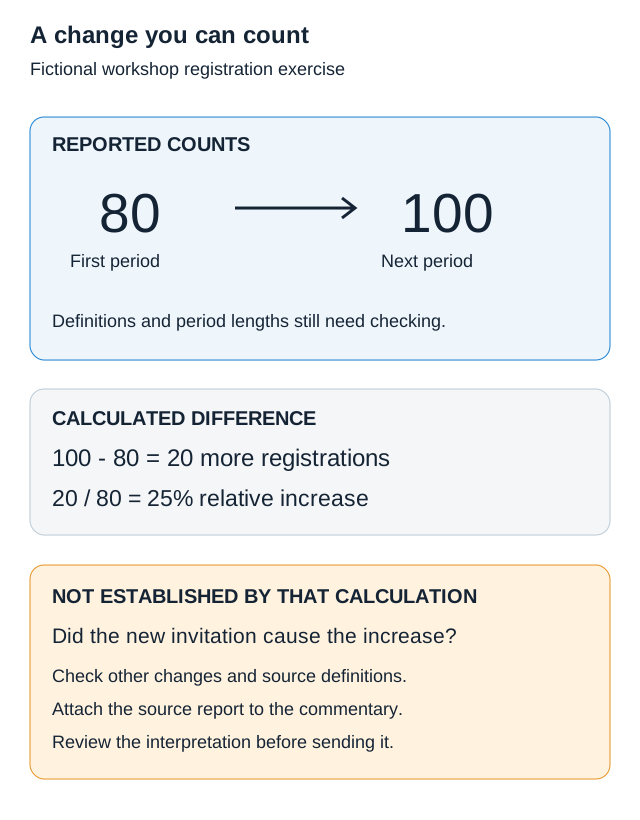
Give the reviewer the source report and definitions along with the commentary. An agent’s summary should make the evidence easier to inspect, not obscure it behind a confident explanation. If the tracking definition changed, the reviewer may decide that the comparison should be removed or qualified.
5. Collect review decisions against the right version
The client approves the event headline in version 3. A colleague comments on version 2 that the invitation should include a consultation. Both comments exist, but they do not amount to one coherent approval.
An agent could organize review notes by asset and revision, then prepare a decision request for the account lead:
We have approval for the version 3 headline. An earlier comment asks for a consultation to be included, while the current brief covers a demonstration and questions. Please confirm the intended event scope before we revise the invitation.
This is a useful follow-up because it identifies the conflict and the decision needed. It does not label the campaign approved or silently choose whichever comment arrived last.
Record the answer beside the affected asset, then ask the reviewer to check the revised copy against it. The same record can show what remains open without sending repeated reminders about decisions already made. Sending any client message should follow the agency’s agreed communication process.
Start with a handoff you can inspect
Choose one campaign and follow its brief into the next deliverable. Write down the input revision, expected output, person responsible and unresolved decision. If those four things are clear, you have a sensible task to examine for agent assistance.
A small pilot should show whether the handoff record stays accurate as comments and revisions arrive. Track your actual review effort and errors; the fictional examples here supply no productivity benchmark. Bring a specific campaign handoff to a BoastOS BoastAble services discussion if you want to work through that choice with us.
Prepared with AI assistance for BoastOS. Campaign examples and reporting numbers are fictional; they are not client results, tested workflows or verified BoastOS features.