

5 AI marketing jobs that give consulting expertise a clear argument
A consultant’s slide can make a strong point in a presentation and say almost nothing when it appears alone on LinkedIn. The explanation stayed in the room. The marketing team has three boxes and a title.
AI marketing for consulting firms can begin with that gap. An agent could collect the slide, its speaker notes and the supporting material, then draft an explanation for the consultant to review. With suitable access and tools, it could carry the approved version into the firm’s content calendar. Expertise still comes from the people doing the work.
Here are five proposed jobs for a small specialist practice. The purchase-request workshop, event and prospect conversations are fictional examples. They illustrate decisions you can make about your own material; they are not client results or demonstrations of tested BoastOS features.
1. Build an article around a recommendation you can defend
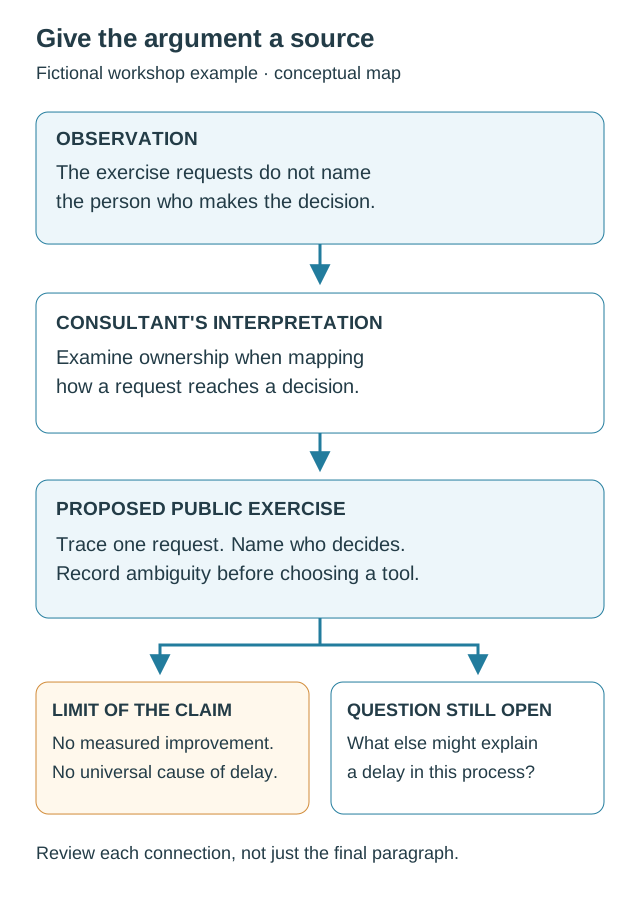
Imagine workshop notes containing purchase requests with no named approval owner. The consultant’s proposed article argues that readers should examine responsibility before choosing a tracking tool. That is a position a reader can act on. “Improve your processes with AI” gives them much less to work with.
An agent could assemble an argument brief before anyone drafts the article. Ask it to separate three things:
| Evidence or judgment? | What belongs in this example |
|---|---|
| Observation from the exercise | The sample requests do not identify who can approve them |
| Consultant’s interpretation | Responsibility is worth examining when mapping the process |
| Proposed next step | Follow a request and record where the decision belongs |
Those rows prevent an easy mistake: treating the interpretation as a measured finding. The exercise supplies no evidence that unclear ownership caused every delay. Workload, missing information or another explanation could still matter.
The agent’s draft might offer this practical exercise:
Choose one purchase request and follow it to the approval step. Write down who receives it and who can decide. If two people expect the other to approve it, record both answers. Clarify that disagreement before selecting a tool to track the request.
The consultant checks whether the exercise follows from the notes, whether any important step is missing and whether the source may be used publicly. Confidential workshop material needs a permitted, properly deidentified version or a clearly labeled fictional example.
The approved brief can then become an article. Keep the source references attached through revisions so that a later edit cannot quietly turn a proposed exercise into a client success story. There is no savings figure to report here.
Choose this job if your firm has useful recommendations buried in workshop material. It gives the writer an argument, an action and the limits of the evidence before they start polishing sentences.
2. Put the missing explanation back into a slide
The practice’s slide contains three boxes: request, review and decision. Its speaker notes identify a training exercise, not an implemented client process. Both files belong in the agent’s source material.
For a public post, a possible adaptation is:
This purchase-request exercise helps a team discuss responsibility. Under “review,” name the person who receives the request. Under “decision,” name the person who approves or declines it. Compare the diagram with what happens when a request moves through your team.
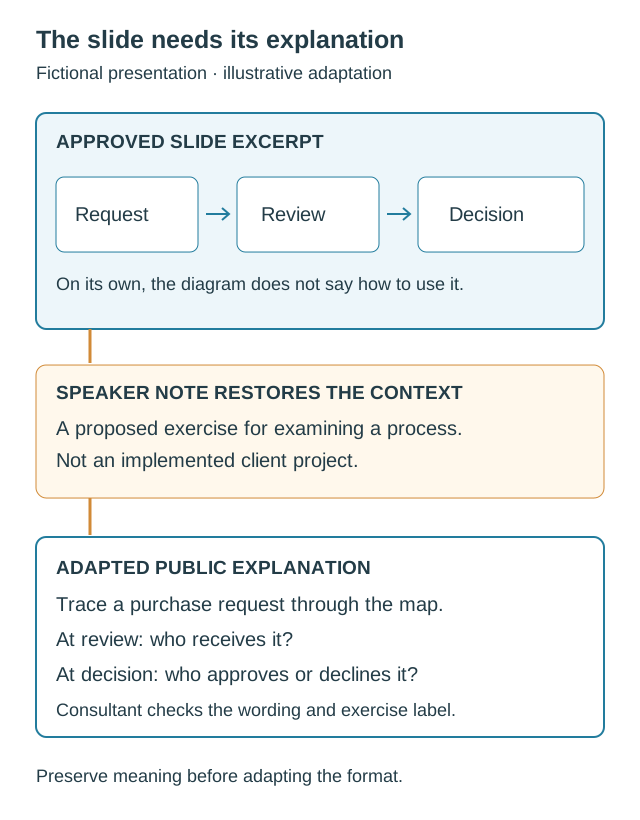
Check the post without the deck open. Can someone tell what the boxes represent, what to do with them and whether the process is hypothetical? The consultant should settle those questions before approving it. An agent could then prepare channel-specific versions from the approved explanation, preserving the exercise label.
These consulting firm marketing ideas are useful when your presentations rely on what the speaker says aloud. A shorter post can work, but it still needs enough context to carry the point.
3. Turn a public question into a focused content assignment
Suppose a prospect asks, “How do we know who approves a purchase request?” An agent could bring that exact question and a link to its permitted public source into the editorial queue. The assignment should fit the question rather than expand into a general software comparison.
Here is a compact brief the consultant could review:
- Question to answer: How can a team identify the person responsible for approval?
- Useful material: The request-tracing exercise and its explanation of receiving versus deciding.
- What is unknown: The prospect’s process, software, delays and interest in hiring the firm.
- Possible reader outcome: A written account of where approval responsibility is clear or disputed.
The agent can propose a topic and assemble related approved sources. It cannot infer that the prospect’s software is broken or that a public question signals buying intent. The consultant decides whether the firm’s expertise supports an answer.
Start here when your calendar has broad themes such as process improvement but no clear reader question. A precise assignment helps you decide what belongs in the article and what can be left out.
4. Invite people to discuss a specific problem
For a confirmed session, give the agent the approved agenda and current registration details. In this fictional example, the exercise involves two possible approvers. That detail can carry the invitation:
Two people could approve the purchase request. Who actually decides? Our process-mapping session will trace an illustrative request and discuss what the team needs to clarify. Follow the registration link for the session details.
The presenter checks that the exercise is actually on the agenda. The event owner supplies the correct date, link and attendance details before sending. Do not let the draft promise faster approvals or savings that the session material does not establish.
This is a contained marketing job: connect the invitation to what participants will discuss. You do not need a long campaign to fix an invitation that only names a topic.
5. Prepare the first conversation from what the prospect actually said
An inquiry arrives: two teams each expect the other to approve requests, and the prospect wants help examining the handoff. Before the call, the consultant needs the correspondence and the gaps in it.
An agent could draft the initial reply using the firm’s approved response process:
You described two teams each expecting the other to approve the request. Who receives it when it changes teams? How does an approval or rejection reach the person waiting? Those details would help us prepare for a conversation about the handoff.
The consultant reviews the questions and adds the firm’s actual next step. This draft does not book a meeting. It also does not diagnose the cause or recommend software.
If a reply comes back, the agent could update a meeting brief with the original messages attached. Separate answered questions from open ones:
| Brief field | How to handle it |
|---|---|
| Reason for contact | Preserve the request to examine the handoff |
| Current approval owner | Record the prospect’s answer, including disagreement |
| Person receiving the request | Leave unanswered if the messages do not identify them |
| How a decision reaches the requester | Quote or summarize the supplied explanation with its source |
An unanswered field is useful preparation. Filling it with a plausible guess would hide the question the consultant needs to ask. Keep this correspondence in the approved client-information environment; public content should not expose an inquiry or imply a case study without permission.
Choose this consulting firm marketing automation job when someone currently has to reconstruct the conversation before every introductory call. Assess it by checking whether the brief matches the latest messages and identifies what remains unknown. Do not mistake a tidy brief for evidence that the firm has already solved the prospect’s problem.
Pick the source material before the marketing job
A recommendation with usable notes supports the article brief. A deck with approved speaker notes supports the slide explanation. A confirmed agenda supports the invitation. Current correspondence supports preparation for an inquiry.
Choose the material you can review now, then decide who will approve its use. Bring that source and the questions around it to a BoastOS BoastAble services discussion. It gives us a concrete piece of marketing work to examine before planning a larger calendar.
Prepared with AI assistance for BoastOS. Workshop, presentation, event and prospect examples are fictional; they do not report client results or tested BoastOS capabilities.