

5 AI marketing jobs that make a distributor's product information useful
Your supplier has sent a specification sheet. A customer still wants to know whether mounting components come with the panels. Somewhere between the document and the product page, a buying question has been missed.
AI marketing for distributors could help your team find and explain those gaps. The agent would need access to approved product information and permitted sales notes. Your product specialist would remain responsible for checking the explanation.
These five proposed jobs suit small industrial and building-products distributors. Every product and account example is fictional; none is a tested BoastOS feature, technical recommendation or customer result.
1. Turn a specification sheet into a buyer’s explanation
For our fictional acoustic-panel range, two documents matter. The supplier sheet lists sizes and finishes. A separate approved note says mounting components are sold separately.
Ask the agent to bring them together for someone considering an order. A draft might say:
Choose a size and finish from the options on this page. Mounting components are sold separately. Tell our product team where you plan to use the panels so they can discuss what information is needed before an order.
The customer can now distinguish a product choice from an inclusion and knows whom to ask about the proposed location. Keep the exact range, document revision and source beside the draft for the specialist’s review.
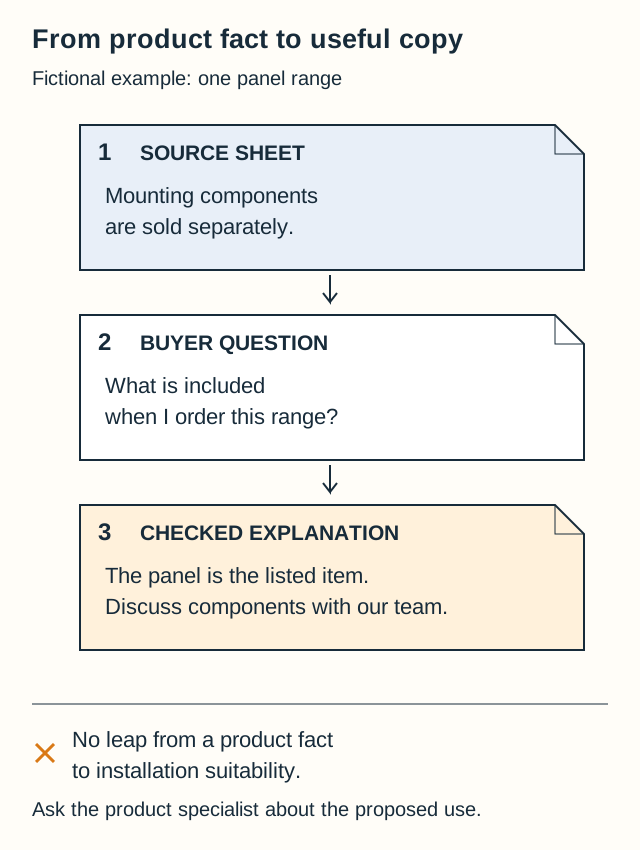
The location question deserves a separate answer. Nothing in this example establishes installation suitability or acoustic performance. A category name can’t supply a missing test. If the specialist needs more information, the agent’s useful output is that question, rather than an assurance added to the page.
Before adding social posts, read the product page as a buyer: does it explain what they’re choosing and what remains to be discussed? This job is worth trying when the sheets are reliable but the website stops at a list of specifications.
2. Build a comparison that shows the unanswered questions
Two panel ranges look similar. Buyers ask which one to choose, but the documents don’t contain a comparable performance test.
The comparison can still show documented dimensions, finish options and mounting-component inclusions. An agent could organize those facts, retaining the original units and a source for each row. Put “comparable evidence not supplied” in the test row. The product manager can then decide whether the available information supports a useful comparison and what to ask the supplier.
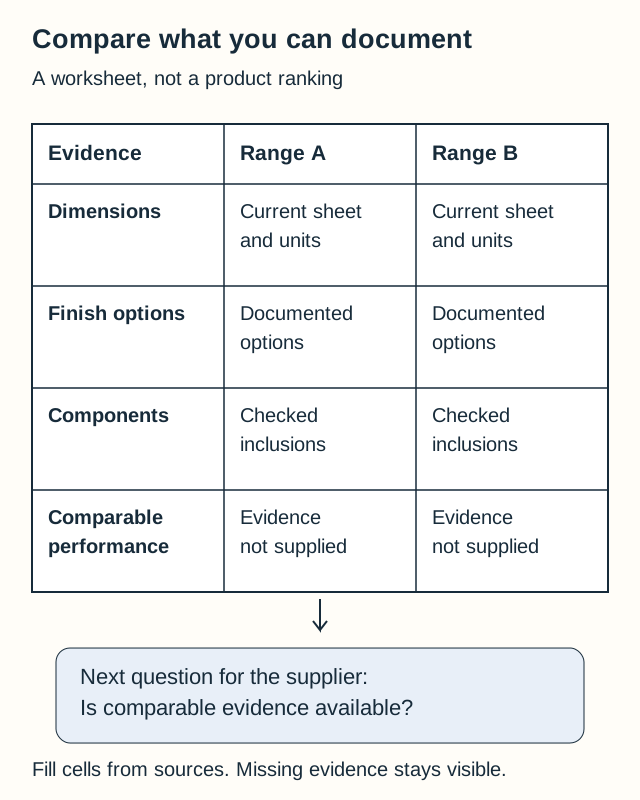
Choose a pair that customers repeatedly discuss. Of all the distributor marketing ideas you might pursue, this one starts with a question already reaching your sales desk. Similar descriptions alone don’t make the products interchangeable, and the page doesn’t have to manufacture a winner to help someone prepare their next inquiry.
3. Prepare account outreach around a stated project
An old purchase tells you what an account bought. A current conversation tells you why a message might be welcome.
Our customer has asked for samples for a reception-area project. The rep has confirmed the sample process and eligible options. An agent could prepare this email from the conversation:
You asked about samples for the reception project. Which finishes would you like our team to check through the sample process?
The rep checks the wording and recipients. If the customer postpones the project, update the account note before preparing another message. Continuity between the inquiry, the latest conversation and the reply is the reason to automate this job. Guessing a new project from a previous order would lose that connection.
4. Adapt supplier material without expanding its claims
When the supplier revises its mounting-components note, where should your team look?
| Your material | What the agent could bring to the reviewer |
|---|---|
| Product page | The statement drawn from the earlier note, alongside the revision |
| Downloadable guide | The affected passage and the range it describes |
| Sample-request reply | Wording that still uses the old inclusion explanation |
Have the agent compare approved revisions and find your own material that uses the changed statement. The product manager checks its scope before the edits are accepted. One range’s update may have no bearing on another.
The buyer needs a clear inclusion explanation using supported supplier wording. An installation assurance, certification or stock promise would need its own evidence. A revised mounting note doesn’t supply it.
Deloitte’s discussion of generative AI in wholesale distribution includes preparing customer-facing collateral and inquiry responses among the applications. For a small distributor, keeping the source attached to each proposed adaptation gives the product manager something concrete to review.
5. Follow up on a quote with the question still open
The buyer asked whether sample approval was needed before discussing an order. The rep owes them an answer.
In this example, the rep confirms that the discussion can happen while the finish choice remains open. An agent could collect the question, current quote and confirmed response, then draft:
We can discuss the quoted range before you’ve settled the finish. Would you like to review that choice with our product team?
If that confirmation hasn’t been recorded, bring the question back to the rep first. If the buyer has already chosen the finish, acknowledge their decision. Keep the relevant quote and its terms with the reply so the team can review the actual discussion.
Distributor marketing automation is useful here when follow-up keeps losing the original inquiry. No reorder prediction is necessary, and the agent has no basis to add a discount or say an unconfirmed item is in stock.
Pick one question your product team can answer
I’d start with the panel inclusion page if the supplier records are current. A comparison needs more evidence, while an account message needs the latest conversation. Choose according to what your team can check today.
Take that question and its sources to a BoastOS BoastAble services conversation. Decide whether buyers need the answer on a product page, in a comparison guide or in a reply about their own project.
Prepared with AI assistance for BoastOS. Product and account examples are fictional applications, not tested results or technical recommendations.